
Dog Body Language Every Kid Should Know
Kids and dogs are drawn to each other.
The problem is that kids speak kid and dogs speak dog — and nobody taught anyone to translate.
Most dog bites happen not because a dog is mean, but because a child missed a signal the dog had been sending for a while. Learning to read dog body language for kids is one of the most practical safety skills a parent can teach.
Tail position tells more than wagging
A wagging tail means a dog is engaged — but it doesn't always mean happy. A tail held high and stiff, wagging fast and tight, can signal that a dog is alert or agitated. A tail tucked low or between the legs means the dog is nervous or scared. Teach kids to look at the whole tail, not just the movement.
Ears flat or pinned back
When a dog's ears press back against its head, it's a sign of stress or discomfort. This is one of the clearest signals dogs give, and one of the easiest for kids to spot once they know to look for it.
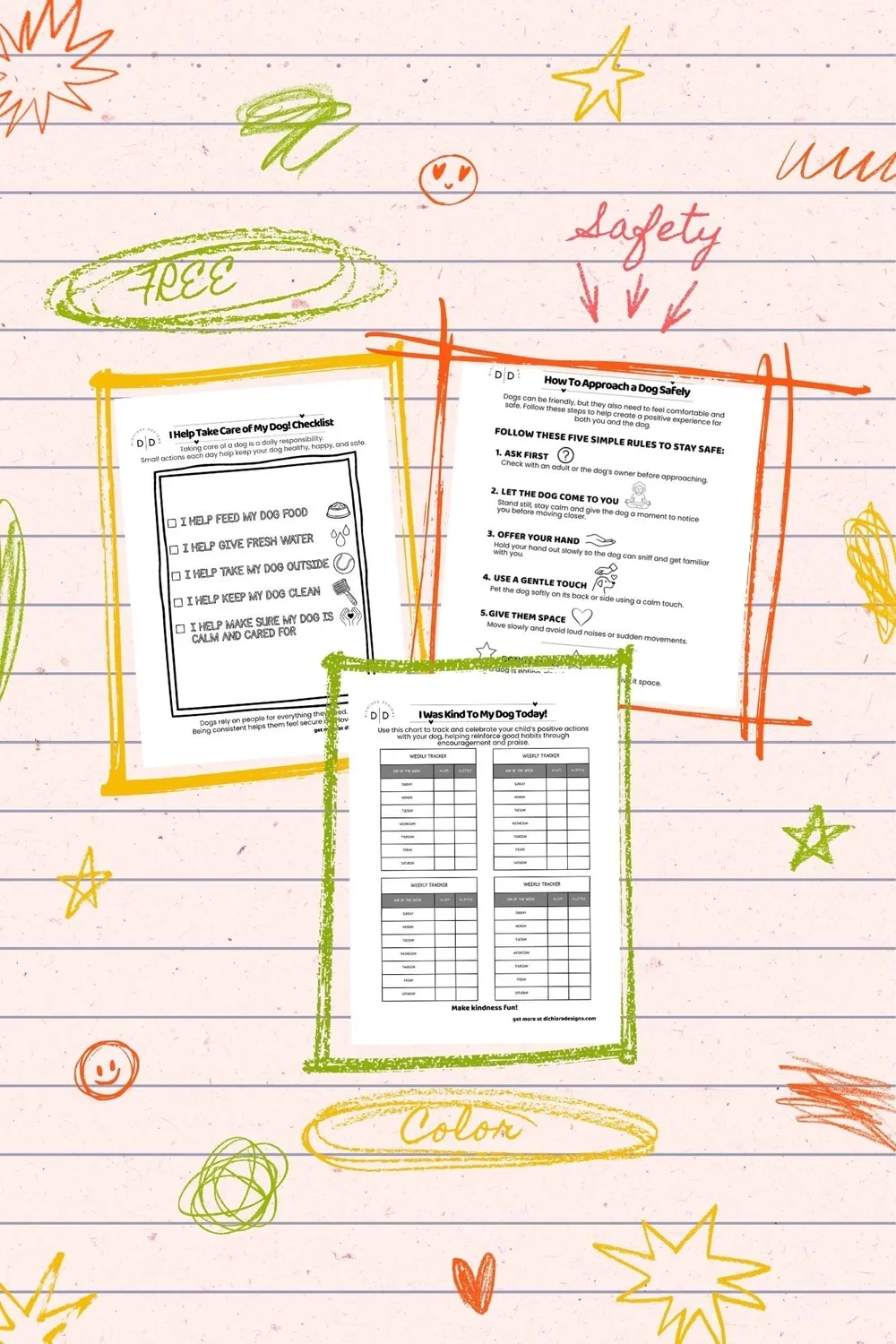
Featuring a dog care checklist, a how to approach a dog safely guide, and an “I Was Kind To My Dog Today!” chart.
A stiff, frozen body
A relaxed dog moves loosely. A dog that goes suddenly still — body tense, weight shifted forward — is telling you it's uncomfortable and deciding what to do next. This is a moment to give the dog space, not move closer.
Yawning and lip licking (when there's no food around)
Dogs yawn and lick their lips when they're stressed, not just when they're tired or hungry. If a child is petting a dog and the dog starts doing either of these things, that's the dog's way of saying it needs a break.
A hard stare
Soft eyes — relaxed, blinking, looking away — mean a dog is comfortable. A hard, unblinking stare directed at a person or another animal is a warning. Teach kids not to stare back and to give the dog room to move away.
None of these signals mean a dog is bad. They mean the dog is communicating, and a child who can read them is a safer, more confident kid around dogs.
Some owners make their dog’s signals even easier to read with a yellow collar or leash that says ASK FIRST or GIVE ME SPACE. If you see one, ask the owner or give the dog room. Have a dog who needs the extra space?
Keep the learning going.
Download the free Dog Safety Activity Pack at dichiaradesigns.com — three printable pages kids can color, fill in, and keep.
And if you want to go deeper, Teaching Kids to Be Kind to Dogs walks kids through kindness, safety, and care with full-page coloring scenes. Find it on Amazon.