
Why 'Ask First' Collars Matter for Reactive and Shy Dogs
Most people reach for a dog before they ask.
Hand out, fast, straight over the head — usually kind, almost always well-meant, and completely unreadable to a dog who needs a second to decide.
An "ask first" dog collar is a bright yellow collar printed with a phrase like ASK FIRST or ASK BEFORE PETTING. It's a visual signal to strangers that they should ask the handler for permission before approaching or touching the dog. Yellow has been widely used as a "give this dog space" color for years.
What does a yellow dog collar mean?
Yellow on a dog's gear is an informal, widely recognized request for space. It doesn't mean the dog is dangerous. It usually means the dog needs a little more room or a little more time than the average dog on the sidewalk — and the handler would rather manage the introduction than have one happen to them.
Which dogs does it help?
Far more than people assume:
Reactive dogs — dogs who bark, lunge or freeze when something comes at them too fast. Reactivity is usually fear, not aggression.
Shy and anxious dogs — dogs who want to say hello but need to make the first move.
Dogs in training — a hand coming in mid-session undoes a lot of work.
Seniors and dogs recovering from injury — being touched in the wrong spot genuinely hurts.
Puppies — every rushed greeting teaches them that strangers arrive without warning.
Working and service dogs — interrupting one is a safety issue, not a rudeness issue.
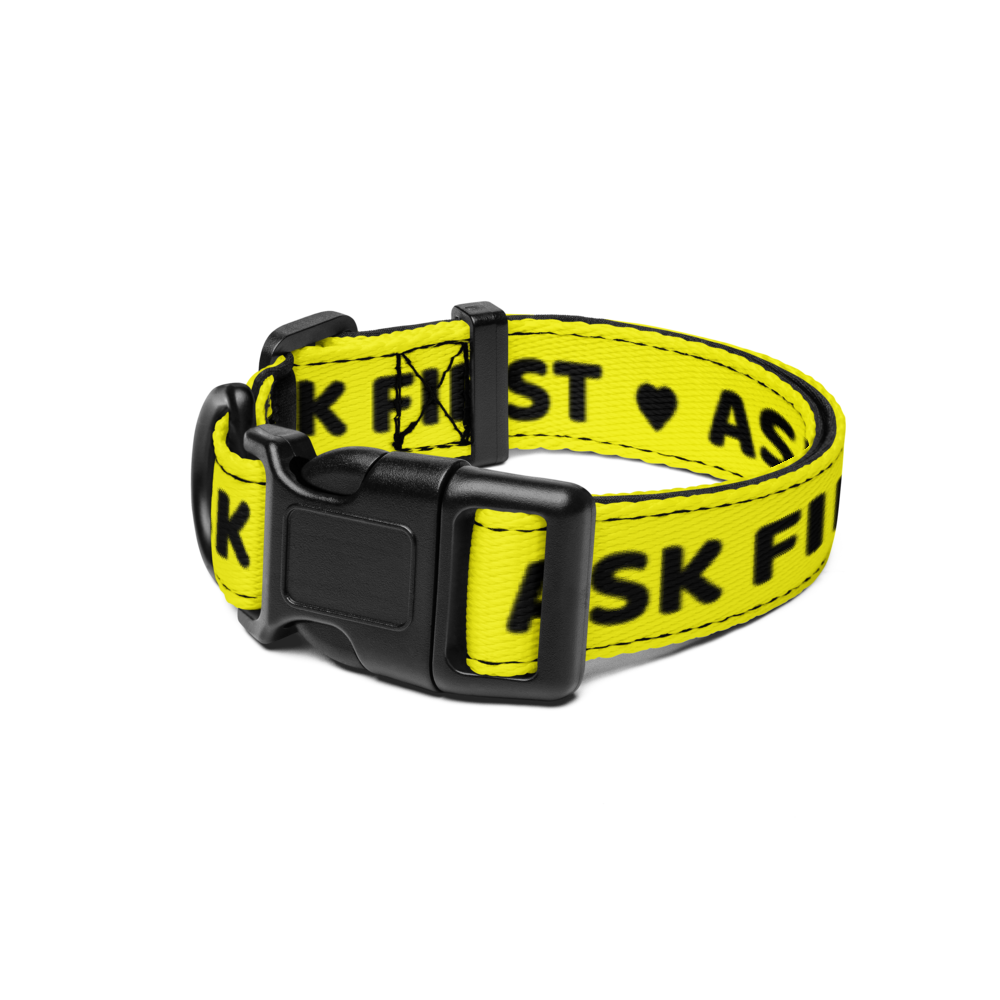
‘Ask First' Yellow Dog Collar — Adjustable, Ask Before Petting
The collar that continues to ask even when the leash is off: at the vet, at daycare, in the yard, at the door when someone comes over.
From $26 · Sizes S, M, L — Shop the collar →
Does a collar actually change what people do?
It changes the opening move. Most people who reach without asking aren't ignoring a boundary, they just never saw one. A phrase they can read from a few feet away gives them something to say instead of something to do — and "can I pet your dog?" is a much easier first step for them, too.
It also works when you're not holding the leash. At the vet, at daycare, in the yard, at the door when someone comes over — the collar keeps asking after the leash comes off.
What it doesn't do
A collar isn't training and it isn't a guarantee. Some people will still reach. It's a head start, not a fence. Pair it with the thing that actually works: letting your dog decide. Ask the person, then let the dog come to them.
Teaching kids the same rule
Children are the most likely to reach first and the easiest to teach. "Ask first, then let the dog choose" is a rule a six-year-old can hold onto, and it's the same lesson we built the Teaching Kids to Be Kind to Dogs coloring book around. There's a free Dog Safety Activity Pack too — a printable guide, checklist and reward chart for ages 6–10.
A dog who gets asked is a dog who gets to answer.
Let the collar ask for you
The Ask First Collar — yellow, adjustable, padded, in S, M and L. It keeps asking at the vet, at daycare, in the yard, at the door — every moment the leash is off and you're not there to say it out loud.
The Ask First Collar & Leash Set — the leash asks from across the sidewalk, the collar keeps asking once you're home.
And if "ask first" isn't quite your dog's message — if what they need is room, not an introduction — the Give Me Space Collar says that instead. New to the yellow "give me space" signal? Read what a Give Me Space collar means.
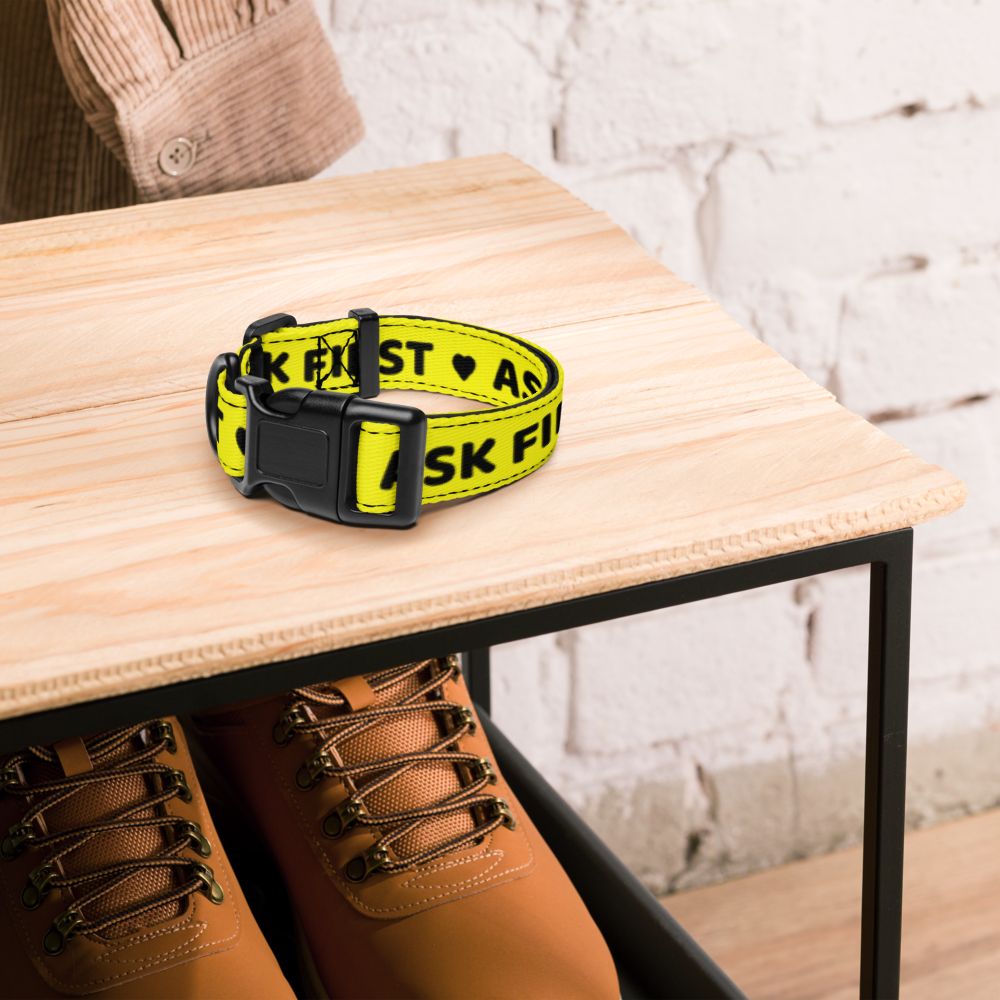
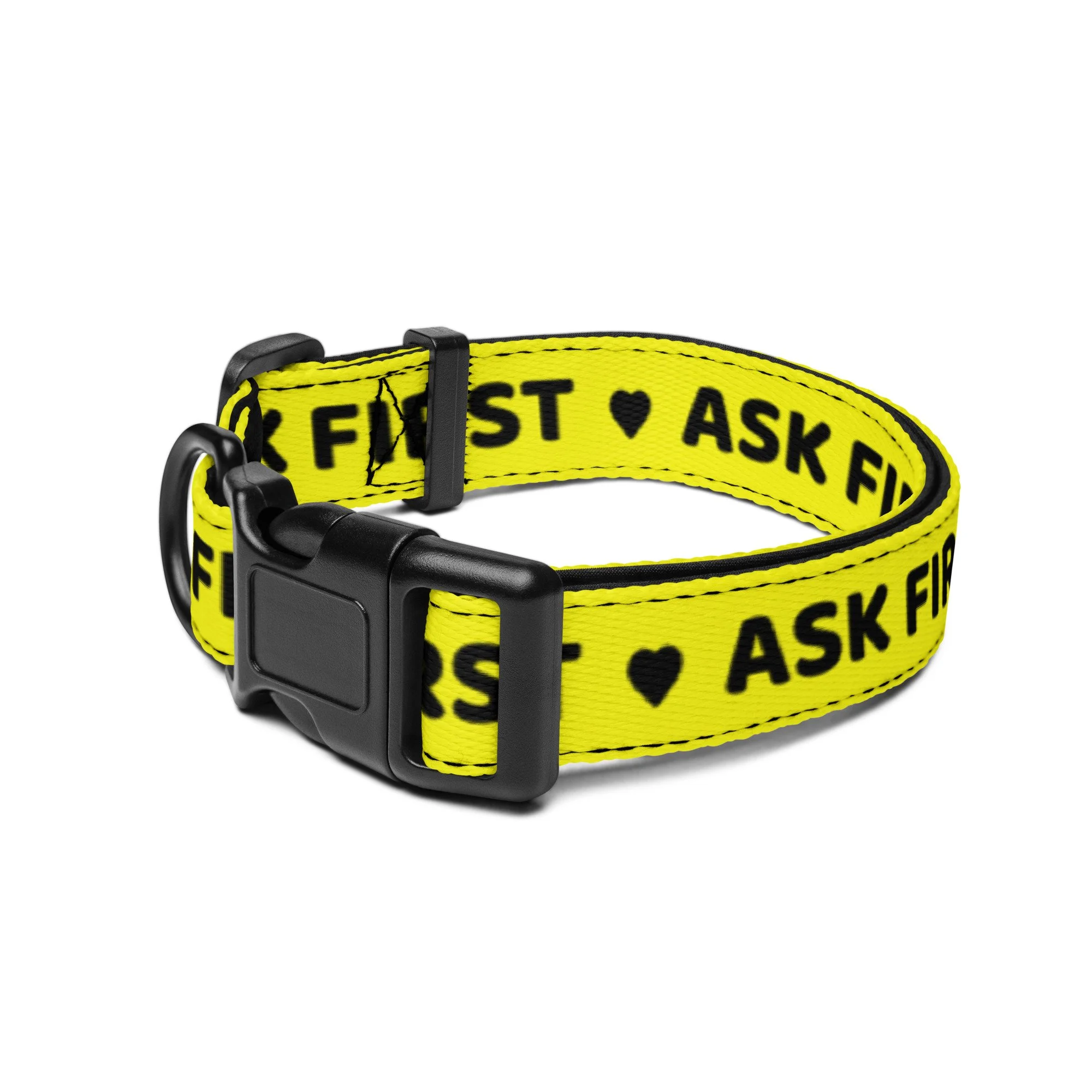
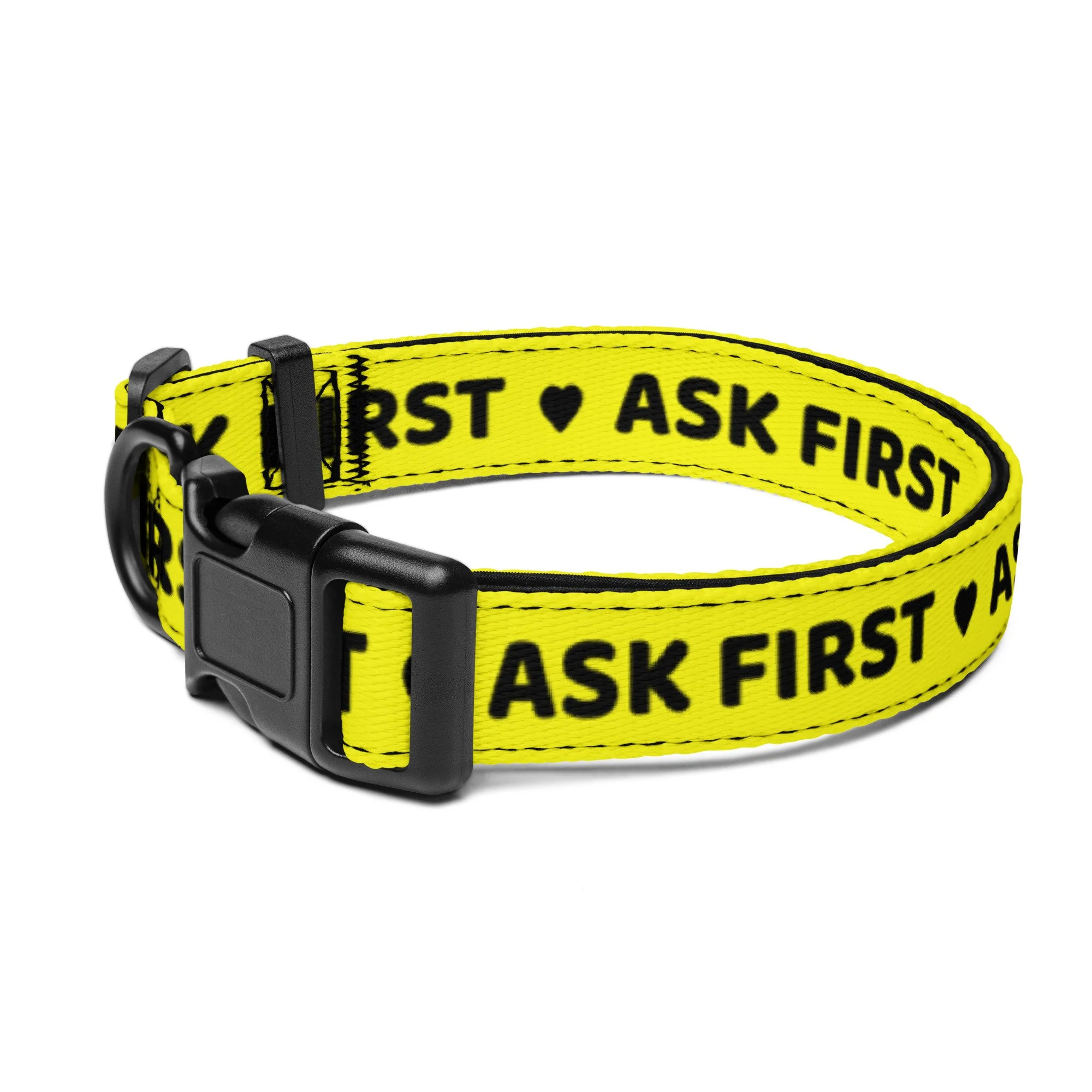
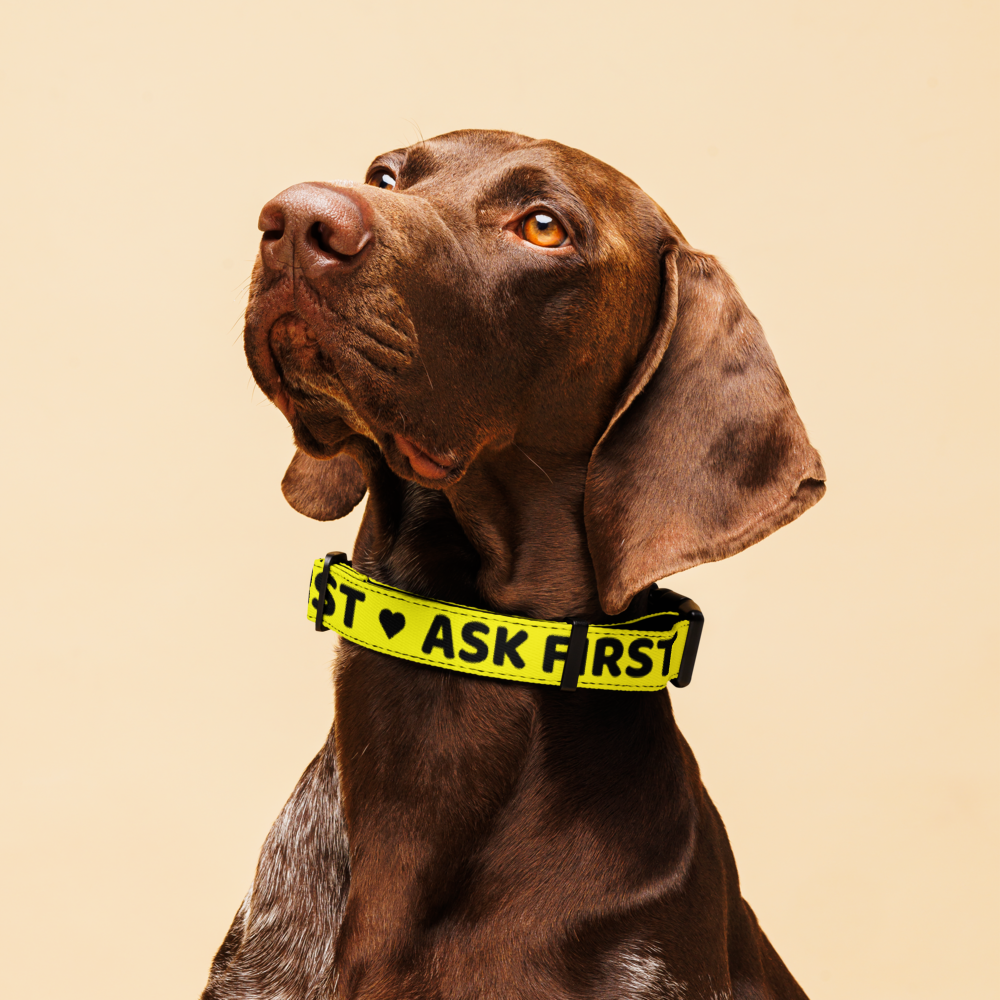
Ask first. Every dog, every time.
Not every dog wants to be petted, and the ones who do would still rather be asked. A stranger's hand coming in fast is a lot for any dog to read: a puppy still learning, a senior who's sore, a service dog working, or one who's simply having an off day.
This yellow dog collar asks even when the leash is off: at the vet, at daycare, in the yard, at the door when someone comes over. Padded 1″ polyester webbing with ASK FIRST printed along it, adjustable in three sizes.
It's the same lesson we put in the books: ask the person, then let the dog decide.
A thoughtful gift for a new puppy parent, or anyone whose dog would rather be asked first.
Part of the Be Kind series by DiChiara Designs.
SIZING (measure your dog's neck before ordering)
• S: 11.8″–17.8″ (30–45 cm)
• M: 13.5″–20.5″ (35–52 cm)
• L: 14.8″–23.8″ (38–60 cm)
DETAILS
• Durable 100% polyester webbing
• 92% polyester, 8% spandex collar inside
• Black 100% polyester sponge collar inside padding
• Adjustable collar length
• Collar width: 1″ (2.54 cm)
• Black plastic main buckle, adjustable buckle, and strap holder
• Blank product sourced from China
Hand wash with mild detergent or machine wash on a gentle cycle in a mesh bag. Air dry.
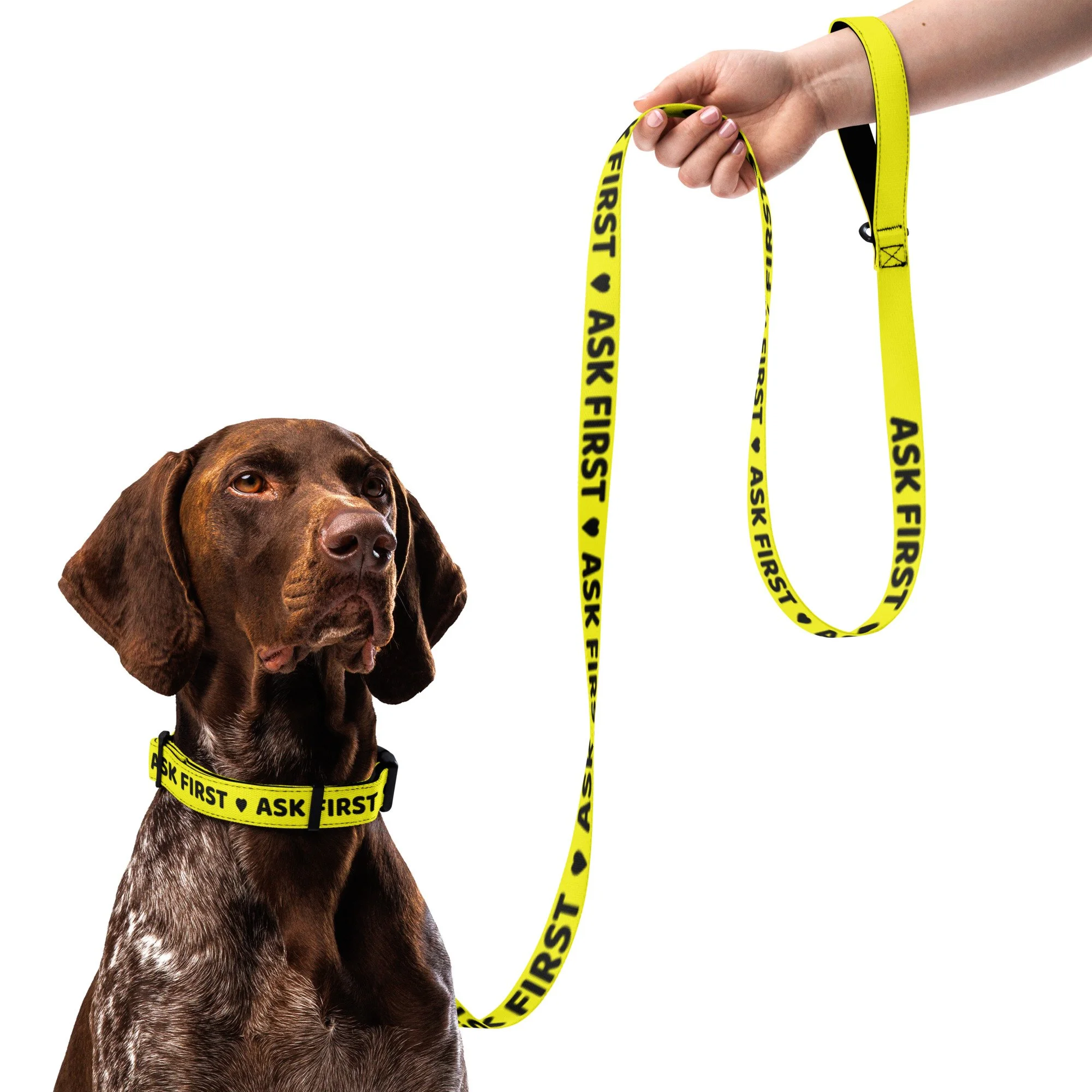
Ask first. Every dog, every time.
Not every dog wants to be petted, and the ones who do would still rather be asked. A stranger's hand coming in fast is a lot for any dog to read: a puppy still learning, a senior who's sore, a service dog working, or one who's simply having an off day.
This matching yellow dog collar and leash set says it twice. The leash asks from a distance. The collar keeps asking when the leash comes off: at the vet, at daycare, in the yard, at the door when someone comes over. Both are padded 1″ polyester webbing with ASK FIRST printed along the length.
It's the same lesson we put in the books: ask the person, then let the dog decide.
A thoughtful gift for a new puppy parent, or anyone whose dog would rather be asked first.
Part of the Be Kind series by DiChiara Designs.
SIZING (measure your dog's neck before ordering)
• S: 11.8″–17.8″ (30–45 cm)
• M: 13.5″–20.5″ (35–52 cm)
• L: 14.8″–23.8″ (38–60 cm)
Leash is one length: 6 ft. (1.83 m)
DETAILS
• Durable 100% polyester webbing
• 92% polyester, 8% spandex collar and leash handle inside
• Black 100% polyester sponge collar and handle padding
• Metal snap hook and D-ring for the leash
• Black plastic main buckle, adjustable buckle, and strap holder
• Leash and collar width: 1″ (2.54 cm)
• Adjustable collar length
• Blank product sourced from China
Hand wash with mild detergent or machine wash on a gentle cycle in a mesh bag. Air dry.
Part of the Be Kind series by DiChiara Designs.