
How to Teach Kids to Be Kind to Dogs
By DiChiara Designs · Updated November 2026
They want to run up, hug and pet every one they see. Helping them slow down and be gentle keeps both the child and the dog safe and happy.
Most kids love dogs.
It matters, too. About half of all dog bite victims are children, according to the American Veterinary Medical Association. The good news: a few simple habits make a big difference. Here's what the experts recommend, in words kids can actually remember.
What are the 5 dog safety rules for kids?
Ask first. Always ask the dog's owner before petting, and ask your grown-up too. No owner around? Don't pet the dog.
Let the dog come to you. Stand still and calm. If the dog walks over, it's saying hello. If it stays away or turns away, it's saying "not today," and that's OK.
Offer your hand. Once the dog comes to you, hold out a loose fist, low and still, and let them sniff. Never reach toward their face. Sniffing is how dogs say hi.
Use a gentle touch. Pet the dog softly on its back or side with a calm touch. Stay away from the face and tail, and don’t lean over the dog.
Give them space. Move slowly and keep your voice soft. If a dog is eating, sleeping or hiding, leave it alone, even a dog you know well. Dogs need quiet time too.
An easy way to practice: say the rules out loud while counting them on your fingers.
Ask first, let the dog come to you, offer your hand to sniff, use a gentle touch, and give the dog space. Five rules, one for each finger, so kids can count them on one hand.
How should a child approach a dog they don't know?
Slowly, and only after asking the owner. Kids should never reach through a fence or run up to a dog they don't know.
Walk up calmly from the side instead of straight at the dog's face, and don't stare into its eyes. Let the dog come to you and sniff first. If the owner says no, that's a kind answer. Some dogs are shy, nervous or still learning, and saying no keeps everyone safe.
How can kids tell when a dog needs space?
Dogs talk with their bodies. If a dog turns away, freezes, or shows signs of worry, it's asking to be left alone. With little kids, spotting these signs is the grown-up's job. They happen fast, and toddlers can't catch them in time.
Signs a dog wants space:
It walks away or turns its head away
Its tail is tucked or its ears are pinned back
It yawns, licks its lips, or lifts a paw
Its body goes stiff, or it stares
It growls, snaps, or shows its teeth
One surprise for a lot of kids (and grown-ups): a wagging tail doesn't always mean a happy dog. A worried dog can wag too. When in doubt, give the dog space.
Get the FREE Dog Safety Pack
Three printables to put these rules into practice at home or in the classroom: a dog care checklist, a guide to meeting a dog safely, and an "I Was Kind to My Dog Today!" chart to celebrate every good day.
How can parents help kids practice being kind to dogs?
Practice before you meet a real dog. Kids learn best by doing, and a calm practice run makes the real moment easier.
Role-play with a stuffed animal. Take turns being the owner, the kid and the dog. Practice asking first and waiting for the dog to come over.
Talk about what dogs need. Food, water, walks, baths, vet visits and plenty of love. Kids who understand that dogs have needs and feelings tend to treat them more gently.
Use the family dog, with a grown-up close by. Practice a gentle touch and giving space at mealtime.
Color and talk. Coloring pages give kids something to do with their hands while you talk about dogs.
Frequently asked questions
-
As soon as they can talk, they can start with "ask first." Toddlers and young kids still need a grown-up right beside them around any dog.
-
No. The American Veterinary Medical Association advises never leaving a baby or small child alone with a dog, even a gentle family dog.
-
It's best to start somewhere else. Pet softly on the back or side, and stay away from the face and tail. Reaching over a dog's head can feel scary to some dogs.
-
Stand still like a tree, arms in, and stay calm. Don't run or scream, and don't stare at the dog. Many dogs will sniff and lose interest. Then back away slowly.
-
Curl into a ball, tuck the head, and cover the face and neck with their arms. Stay still until the dog moves away, then get a grown-up. If a dog bites, even a small bite, tell a grown-up right away and call your doctor.
-
It usually means the dog needs space, so always ask before you get close. Read more about 'Ask First' collars →
In a world where you can be anything, be kind to dogs.
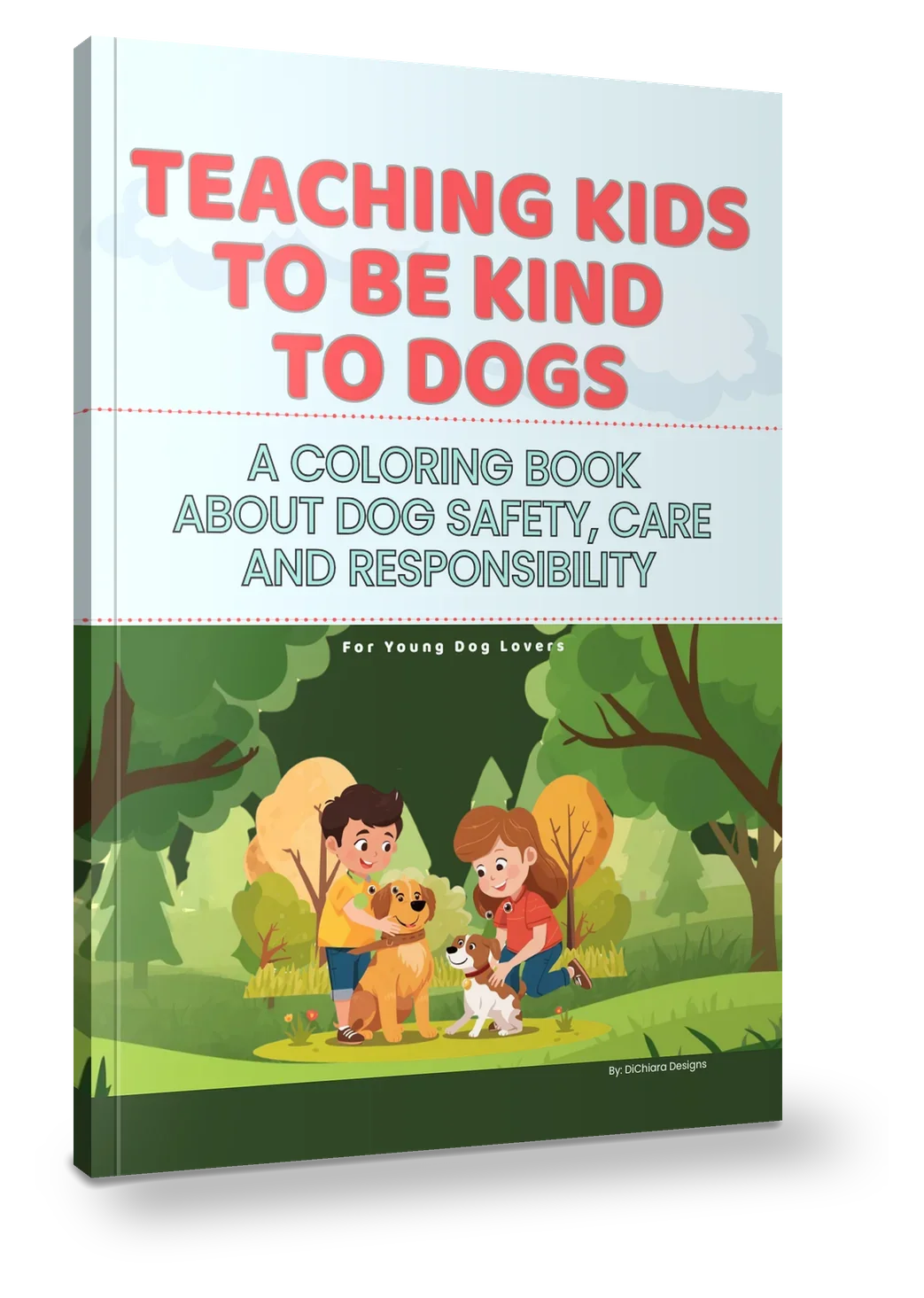
Our coloring book, Teaching Kids to Be Kind to Dogs, was made from a lifelong love of dogs. Its pages are all about caring for a dog — bath time, vet visits, playtime and plenty of love — plus a safety page with the five rules above.
Sources
This guide shares general tips from the groups listed below. Every dog is different. If a dog’s behavior worries you, talk to a vet or a certified trainer.