
Gentle Hands for Kids: How to Teach Little Ones to Be Gentle With Dogs
Little hands love to grab, pat and squeeze.
With a dog, that can go wrong fast. Teaching gentle hands for kids isn't about saying "no" over and over. It's about showing them what gentle actually looks and feels like.
The good news? Kids learn gentle hands the same way they learn everything else: one small, repeated step at a time.
Why do little ones grab and squeeze?
It's not meanness. Young kids are still learning how strong they are. A "pat" can land like a smack, and a hug can feel like a squeeze. They're excited, and excitement comes out through their hands.
What does gentle touch look like?
Gentle touch is rule 4 of the five dog safety rules: ask first, let them come, offer your hand, gentle touch, give them space. (Here are all five, explained.)
For little ones, gentle touch means:
Flat, open hand. No fingers grabbing fur.
Slow strokes. Pet the way you'd smooth a blanket.
Back, chest or side. Not the face, tail or paws.
One hand at a time. Two hands quickly turns into a hug.
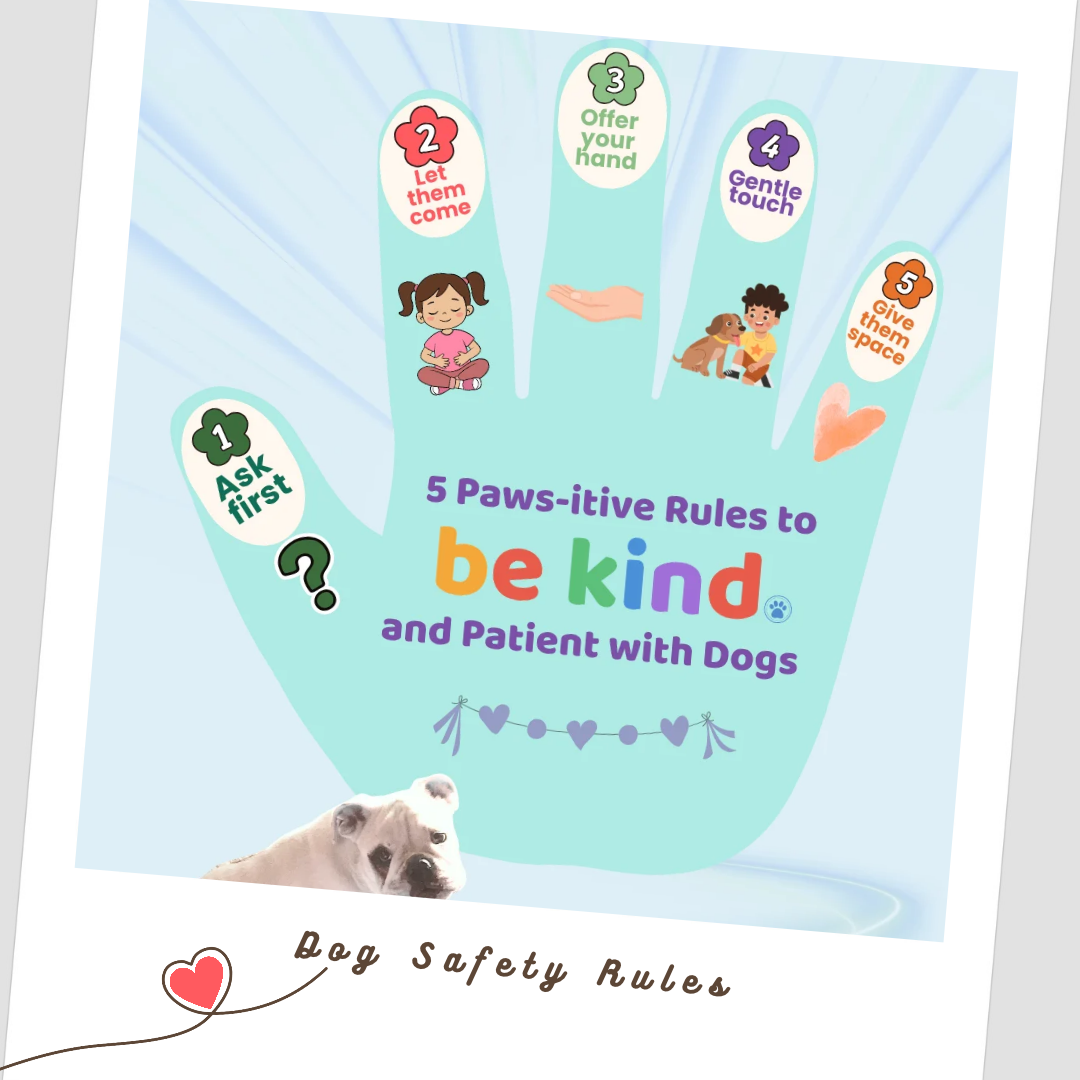
Dog Safety Rules for Kids: 5 Finger Guide to Meeting Dogs Safely
Five simple dog safety rules kids can count on one hand: ask first, let them come, offer your hand, gentle touch, and give them space.
How do you teach gentle hands?
Practice on a stuffed dog first. Show them, then let them copy. Praise the soft pets out loud: "Those are gentle hands!"
Guide their hand with yours. Rest your hand on top of theirs for the first few real pets so they feel the right pressure.
Use a little chant. "Soft hands, slow hands, one pet, then pause." Kids remember what they can sing.
Pet and pause. Help them pet for a few seconds, then stop together. If the dog leans in for more, keep going. If the dog walks away, that's their answer. Let them go.
Who watches the dog?
Little ones can't read a dog's signals or react fast enough, so that job belongs to the grown-up. End the petting and move your child back if the dog:
Turns its head away or walks off
Licks its lips or yawns
Goes stiff or very still
Your child only needs one simple rule: when the dog walks away, we let them go. As kids get older, they can start spotting these signs themselves. Here's a closer look at dog body language every kid should know.
Some dogs make it extra clear. A yellow collar or leash that says ASK FIRST or GIVE ME SPACE means check with the owner before little hands reach out. Have a dog who needs that signal? See the yellow collars and leashes →
What's always off-limits?
Some things aren't up to the dog's mood. No pulling ears or tails. No climbing or sitting on a dog. And leave a dog alone while it's eating or sleeping. With little ones, a grown-up stays close every time they're with a dog.
Gentle hands take practice, and that's okay. Every soft pet is a small act of kindness, and kids who learn it early carry it with them for life.
Want a simple place to start?
The free Dog Safety Activity Pack is a printable guide, checklist and reward chart for kids ages 6–10. Get the free download.
Teaching Kids to Be Kind to Dogs is a coloring book built around kindness and respect for dogs, so kids can practice being gentle one page at a time. Get it on Amazon.
Part of the Be Kind series by DiChiara Designs.